You brush, you try to keep snacks in check, and you still wonder why one small spot turns into a filling. If you have kids, the pressure doubles. One missed cleaning, one rough week of rushed bedtimes, and suddenly you are worrying about cavities, cost, and whether you caught a problem too late. That stress is common, and it makes sense. Preventive dental care sounds simple until real life gets in the way, which is why many families also ask about cosmetic dentistry services in Monterey Park.
The good news is that most family dental visits are not about fixing damage after the fact. They are about stopping trouble early. A family dentist usually relies on a handful of proven tools that protect teeth, lower cavity risk, and make treatment less expensive over time. If you want the short version, here it is. Fluoride, sealants, risk assessment, and routine professional cleanings are the four practical tools that do the most work before pain starts.
Preventive dental care works best before you see a problem
Tooth decay rarely starts with a dramatic warning. It begins quietly. A child may have no pain at all. An adult may only notice brief sensitivity and ignore it because work is busy and the calendar is full. That is how small issues grow. By the time a cavity hurts, the fix is often larger, more expensive, and harder to fit into your week.
This is why preventive dental tools matter so much in a family practice. They are not fancy add ons. They are the basic systems dentists use to reduce risk across different ages. A toddler with new teeth, a teen with deep grooves in molars, and a parent with dry mouth from medication do not need the exact same plan. They do need a dentist who looks at prevention as a daily strategy, not a one time event.
That strategy often starts with fluoride. According to the CDC, fluoride helps prevent cavities by making teeth more resistant to acid attacks from plaque, bacteria, and sugars. In practice, that can mean fluoride toothpaste at home and fluoride treatments in the office for people who need extra protection. If you have ever thought, “We already brush, why is this still coming up,” fluoride is often part of the answer because it strengthens enamel where brushing alone cannot reverse every early weak spot.
Sealants are another tool families often hear about once children start getting permanent molars. The back teeth have grooves that trap food and bacteria, and those grooves can be hard to clean even when brushing habits are solid. The CDC explains that dental sealants can prevent many cavities in children by placing a protective coating over those chewing surfaces. The process is quick, painless, and far easier than treating decay once it forms.
Risk assessment is less visible, but it shapes everything else. Dentists do not just count cavities. They look at habits, diet, past decay, fluoride exposure, saliva flow, and age related risk. The American Academy of Pediatric Dentistry supports caries risk assessment and management for infants, children, and adolescents because prevention works better when care is tailored to the person in the chair. One child may need sealants and fluoride varnish. Another may need diet changes and closer follow up because cavities keep returning.
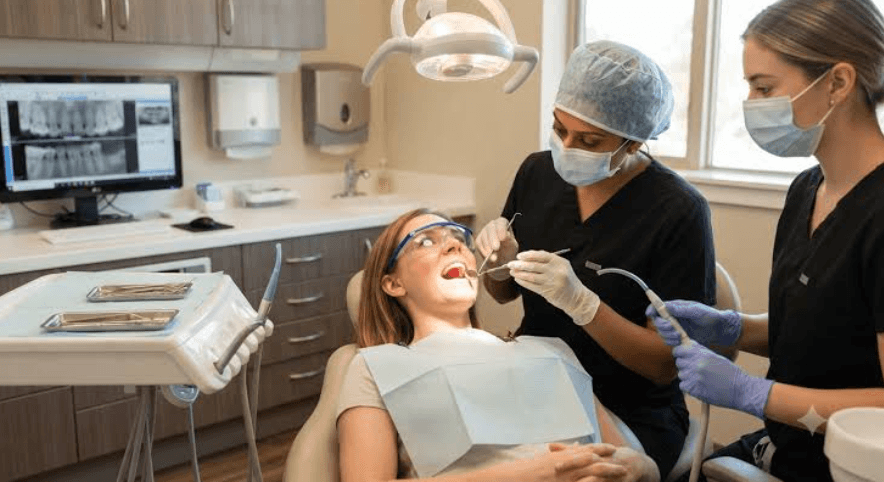
The fourth tool is routine professional cleaning and exam. This sounds ordinary because it is familiar, but it is still one of the most useful parts of family dentistry. Cleanings remove buildup that home care misses. Exams catch cracks, early decay, gum irritation, and changes in bite before they become bigger problems. A good family dentist is not waiting for damage to show up on an X ray. They are watching patterns, spotting weak points, and adjusting prevention as your needs change.
See also: Why Dental Cleanings Are A Cornerstone Of General Dentistry
Family dentistry prevention tools each solve a different problem
| Preventive Tool | What It Does | Best Use | What Happens Without It |
| Fluoride treatment | Strengthens enamel and helps slow early decay | Children, teens, adults with high cavity risk | Enamel stays more vulnerable to acid and decay |
| Dental sealants | Covers deep grooves in back teeth | Children and teens with new molars | Food and bacteria collect in hard to clean pits |
| Caries risk assessment | Identifies personal cavity risk factors | All ages, especially kids and repeat cavity patients | Care stays generic instead of targeted |
| Professional cleaning and exam | Removes buildup and finds issues early | Everyone in the household | Problems are often found later and cost more to treat |
Each tool fills a gap that brushing and flossing at home cannot fully cover. That is the part many families do not hear clearly enough. Home care matters, but it is not a complete system by itself. A child can brush every night and still get cavities in deep molar grooves. An adult can floss regularly and still face enamel wear, recession, or dry mouth that raises decay risk. Preventive care in a dental office closes those gaps.
Three steps you can take before the next dental problem starts
Ask for a risk based prevention plan. Do not settle for a generic “keep brushing” message. Ask what your specific cavity risk looks like, what factors are driving it, and which preventive tools fit your age and habits. This matters for children, but it matters just as much for adults with crowns, gum recession, or medication related dry mouth.
Protect molars early. If your child has permanent molars coming in, ask about sealants before decay starts. If you are an adult with deep grooves and a history of cavities, ask whether extra fluoride or closer monitoring makes sense. Timing matters because prevention is easiest before the tooth surface breaks down.
Keep recall visits on the calendar. A delayed cleaning often feels harmless until a small issue becomes a larger one. Scheduling routine visits in advance removes one more thing from your mental load, and it gives your dentist a chance to catch changes when they are still easy to manage.
Simple preventive dentistry often saves families time, stress, and money
Most people do not ignore dental care because they do not care. They are juggling school pickups, work deadlines, insurance questions, and the hope that a small issue will stay small. That hope is understandable, but prevention is usually the safer bet. The right tools used at the right time can lower cavity risk, reduce future treatment, and help every member of the household keep a healthier smile with less disruption.
If you have been putting off a visit, this is a good time to schedule one and ask what preventive steps make sense for your family. A trusted family dentist can help you build a plan that fits real life and protects teeth before problems become harder to fix.